
Playbooks
Build repeatable workflows and run or schedule them reliably
Playbooks turn successful one-off execution into repeatable workflows. Use them when you want consistency across operators, agents, and time.
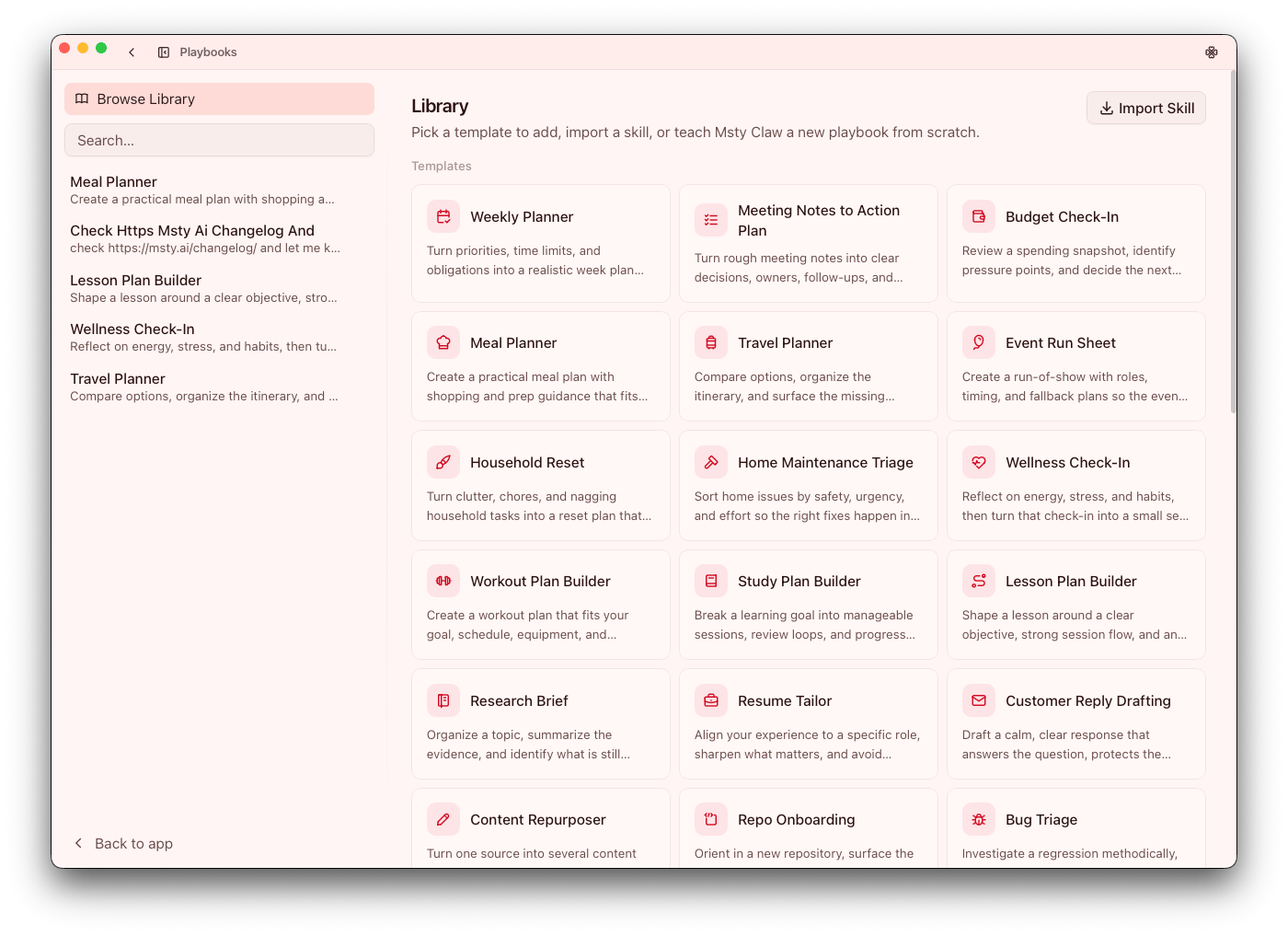
What a playbook should contain
A strong playbook includes:
- Clear intent and trigger conditions
- Required inputs
- Ordered execution steps
- Guardrails and approval expectations
- Success criteria
- Optional model/workspace context
The more explicit these elements are, the easier it is for different operators to get comparable outcomes.
Creation paths
You can create playbooks from:
- Built-in catalog starters
- Custom authoring
- Teach-mode sessions (chat-to-playbook)
Guidance:
- Start from a proven real run
- Extract repeatable logic, not incidental details
Avoid building playbooks from hypothetical workflows. Real execution history usually produces clearer and more reliable steps.
Run modes
Playbooks can run in current or new chat flows (depending on context), and can also be scheduled. Choose run mode based on oversight needs: interactive runs for learning and refinement, scheduled runs for stable repetitive work.
You can also select which agent runs a playbook. Use this to align playbook execution with the right permissions, runtime, and working style instead of relying on whichever chat is currently active.
Recommended rollout:
- Manual run with small scope
- Validate output quality and approval behavior
- Expand scope or schedule after reliability is proven
Data Protection coverage
Playbook runs can use Data Protection coverage across both prompt content and tool-invocation paths.
Use this when playbooks process sensitive operational or personal data, and validate redaction behavior as part of playbook acceptance testing.
Auto Refine
Auto Refine captures improvement candidates from real executions and lets you apply changes intentionally. Treat refinement suggestions as proposals, not automatic truth. Human review keeps behavior aligned with operational intent.
Best practice:
- Batch review refine suggestions regularly
- Accept only changes that improve determinism and clarity
Playbooks and Skills
Claw supports conversion in both directions:
- Playbook -> Skill
- Skill -> Playbook
Use conversion when you want to move from conversational flow to reusable packaged behavior. This is useful when a repeated manual pattern matures into something worth standardizing for a broader team.
Common failure patterns
- Steps too broad or ambiguous
- Missing success criteria
- Unclear approval boundaries
- Overfitting to one dataset/project
When failures recur, tighten scope and rewrite steps in concrete, testable language before expanding again.